
01 About me
Hi, I'm Harry.
Most of my nine years have gone into distributed systems — incident alerting, authorization services, developer tooling — but I've never really stayed in one lane. I've shipped frontends, handled the infrastructure and DevOps side, and run projects end to end. I'm usually happiest filling whatever gap the team actually has.
Outside of work I sing in a choir, which is where the seating manager below came from. I've also picked up crochet and knitting lately — a nice change from work, in that I end up with something I can actually hold. I've been to more than 25 countries and I plan most trips around what I'm going to eat when I get there. Otherwise I'm playing tennis, swimming, or finding a reason to be outdoors around Vancouver.
02 Work
University of British Columbia
2012 — 2017BASc Computer Engineering · Software Option
Computer engineering rather than straight computer science, on the Software Option — a specialised track in software engineering and software engineering process management, which UBC has since retired. The process half felt like overhead at the time and is the part I lean on most now. The projects didn't pick a lane either — processor design at one end, search ranking at the other — which set the pattern for everything after.
- Capstone
- A recommendation system for Food.ee, on Elasticsearch over their proprietary APIs
- Hardware
- A cannon battle game in C on an FPGA board — including designing the processor it ran on
- Also built
- Pong written in VHDL, and an electromagnetic tether robot
Fortinet
2017 — 2019Web Developer I · FortiOS platform
First job out of UBC, and where I learned to be an engineer rather than a student. A Django web GUI on top of C backend APIs for the operating system Fortinet's appliances run — full-stack in a fairly literal sense, and my first taste of both. Twenty-odd projects in two years, mini through medium and each small enough to own end to end, which is enough repetition for thinking a design through and iterating before committing to become habit rather than advice.
- Delivery
- 20+ projects owned, design through implementation
- Features
- Indicator-of-compromise visualisation and DHCP client configuration — the two I'd point at
- Debugging
- 100+ complex bugs cleared across the platform
Amazon Alexa
2019 — 2021SDE I–II · Alexa-Hosted Skills
A managed AWS environment for hundreds of thousands of external developers to run their skills in, which meant our failures were their outages — and constraints from upstream reached them through us. Also where I wrote ask-sdk-jsx-for-apl: watching developers hand-write Alexa Presentation Language as raw JSON got painful enough that I fixed it.
The work I'd point at, though, is the Node.js runtime migration. Lambda was retiring the runtime our customers' skills ran on, which was never ours to negotiate — and until a skill moved, the developer who owned it couldn't ship an update to it at all. Asking hundreds of thousands of people to migrate themselves would have stranded most of them, so we did it for them. The part I'd defend hardest is that we built it to be run again rather than run once: the runtime underneath us was always going to be deprecated again, and a migration you can only perform by hand is a problem you get to solve twice.
- Platform impact
- 2 weeks added to the deprecation deadline after I found and reported a bug in the runtime itself
- Releases
- Led the Python runtime support and template service releases
- On-call
- 15 min response target on high-priority rotations
- Open source
- Authored and open-sourced ask-sdk-jsx-for-apl, still on npm
Microsoft
2021 — 2022Software Developer II · Viva Amplify
A year on the question that comes before the code. The team was new and the product didn't have a name yet; the work was establishing whether the data side of it was viable at all — which signals were actually available to us, and how much depth we could process fast enough for the idea to hold up. I was also the team's frontend person, which is how I ended up building the barebones dashboard for the first dataplane designs.
- Research
- 0 to 1 feasibility on data ingestion for what's now Viva Amplify
- Frontend
- Barebones dashboard behind the initial dataplane designs
- Team
- Owned onboarding and culture for a brand-new team
Amazon Web Services
2022 — 2024SDE II · Alerting and on-call
The system that pages people. Nobody thinks about it while it works, and when it drops a page an on-call engineer doesn't get woken while their service is on fire — so the tolerance for failure is about zero. Two years on two things: making it regionally redundant, so one region's bad day can't take paging down with it, and migrating a legacy Perl script system onto managed AWS services so it could grow features again instead of only being kept alive.
The incident I'd point at is the day our upstream voice and SMS provider went down and took the phone and text channels with it. I ran internal communications while our product manager worked the vendor side, which mostly meant telling on-call engineers across the company what they could and couldn't rely on while it lasted. We were back inside two hours, the service never went fully dark because the remaining channels carried it, and none of it was improvised — we followed a runbook that had already been written for exactly this, which is the unglamorous version and the one I'd rather tell.
- Incident response
- 2 hours to recovery on a third-party outage, with no full loss of the alerting service
- Reliability
- Regional redundancy for a service that can't be allowed to go quiet
- Modernisation
- Perl script system migrated onto modern managed services
- Ownership
- Sole engineer on the team outside Seattle — end-to-end by default
Amazon Web Services
2024 — nowSDE II · Authorization services
Human review and a paper trail standing between an engineer and an action that would be expensive to get wrong. The org's remit is change safety — the guardrails that make it hard to do damage by accident, and the record that explains what happened when somebody does. I've led the design and the security and privacy reviews for six major features here, and built a self-service portal that took exception handling out of a ticket queue.
- Design leadership
- 6 major features where I led design and the security and privacy reviews
- Team
- 3-person pod behind the self-service portal
- Mentoring
- Engineers and interns through onboarding and promotion
03 Projects
-
ask-sdk-jsx-for-apl
2020A JSX templating framework for Alexa Presentation Language, written and published during my time on Alexa. Skill developers had been hand-writing APL documents as raw JSON; this lets them compose the same documents as React components instead. Released open source under Amazon's alexa-labs organisation.
-
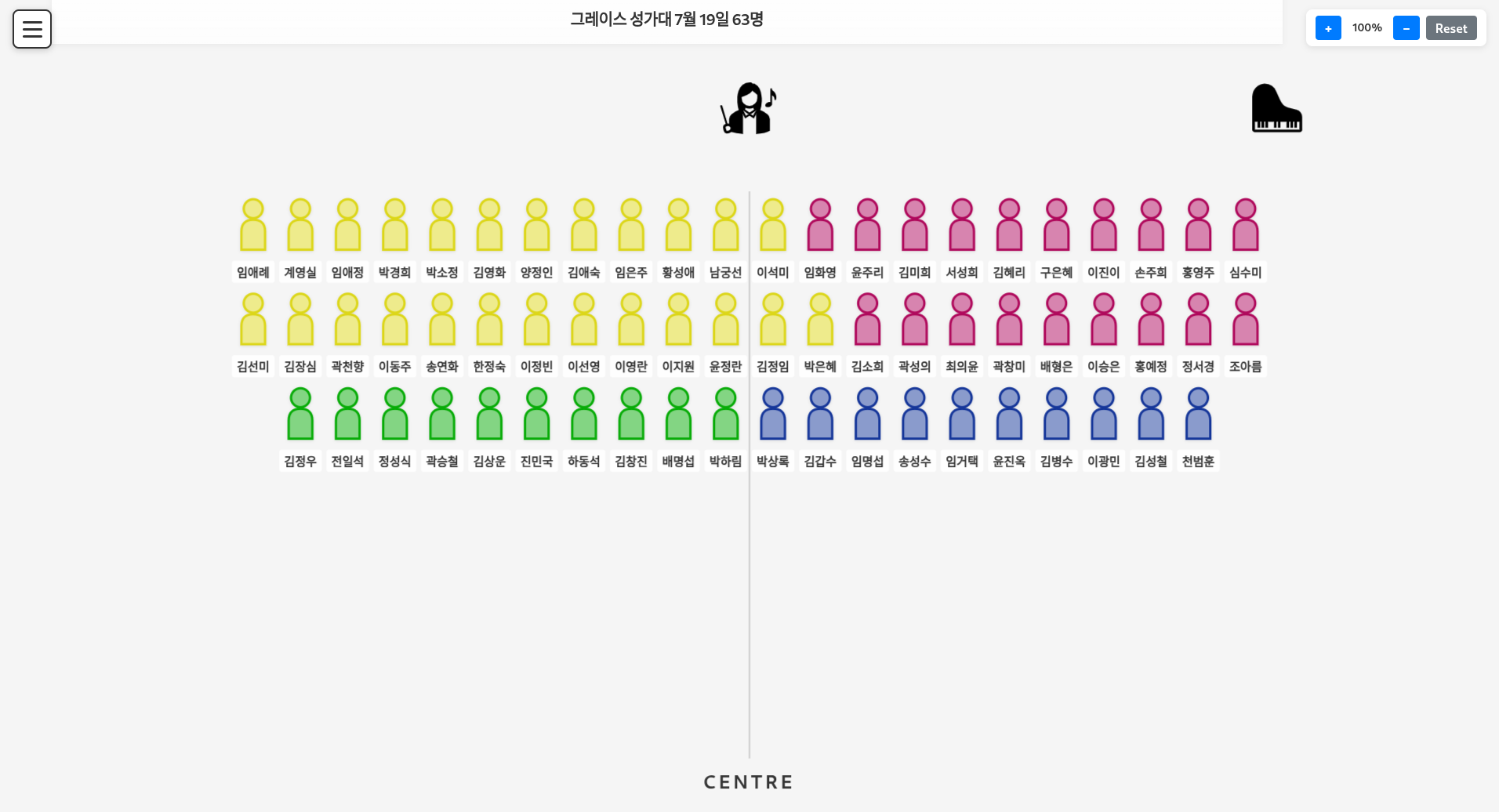
choir-seating-manager
2026Standing-order management for a choir — arrange singers by voice section, reorder within a section, import and export arrangements. Built as a monorepo with the AWS infrastructure defined in CDK next to the app, so the deploy is reproducible instead of remembered.
-

reddit-visor
2025A visual-first Reddit client that puts media in a masonry grid instead of a text list. Most of the work went into the media layer: Reddit-hosted video, YouTube, Imgur and several other hosts each need their own handling, plus a sensible fallback when a thumbnail simply doesn't exist.
04 Skills
- Core
- Java · Kotlin · TypeScript · Python · React
- Also shipped in
- C · C++ · C# · Ruby · Perl · JavaScript · Angular · SCSS
- Cloud & infrastructure
- AWS — Lambda, S3, DynamoDB, API Gateway, IAM, CloudFormation, CDK
- AI
- RAG · LLM agents · Prompt engineering
- Leading
- Project management · Mentorship · Scrum · Agile